Issued by Stereo Sound online
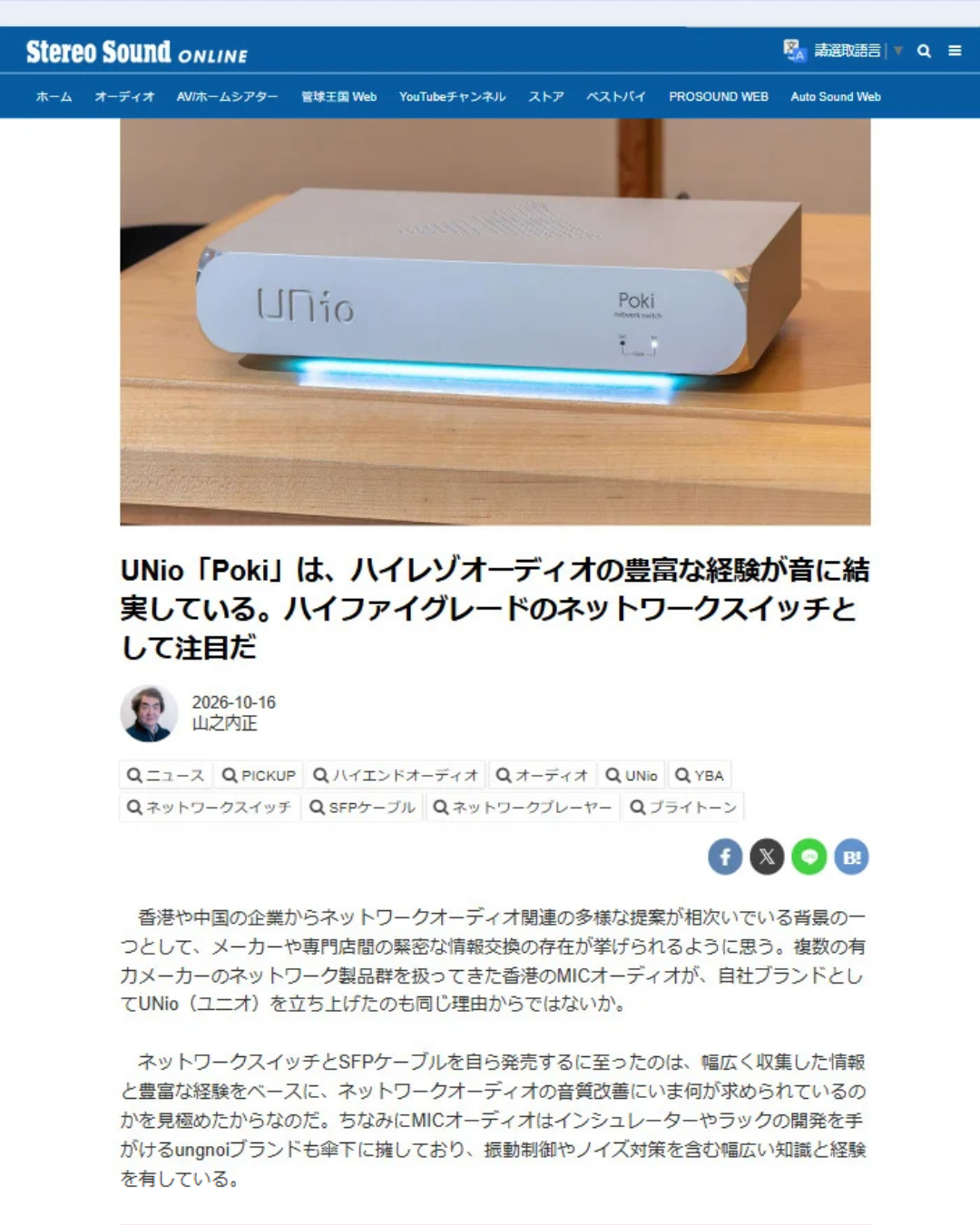
One of the key factors behind the influx of network audio proposals from companies in Hong Kong and Mainland China is the close exchange of information between manufacturers and specialized audio retailers. It is likely for this same reason that Hong Kong’s MIC Audio, which has long distributed network products from multiple leading brands, established its proprietary brand, UNio.
Their decision to develop and launch network switches and SFP cables in-house stems from a clear understanding—built on extensive market intelligence and practical experience—of what is truly needed today to enhance network audio sound quality. Notably, MIC Audio also owns the ungnoi brand, which specializes in isolators and equipment racks, giving them deep expertise and hands-on experience in vibration control and noise mitigation.
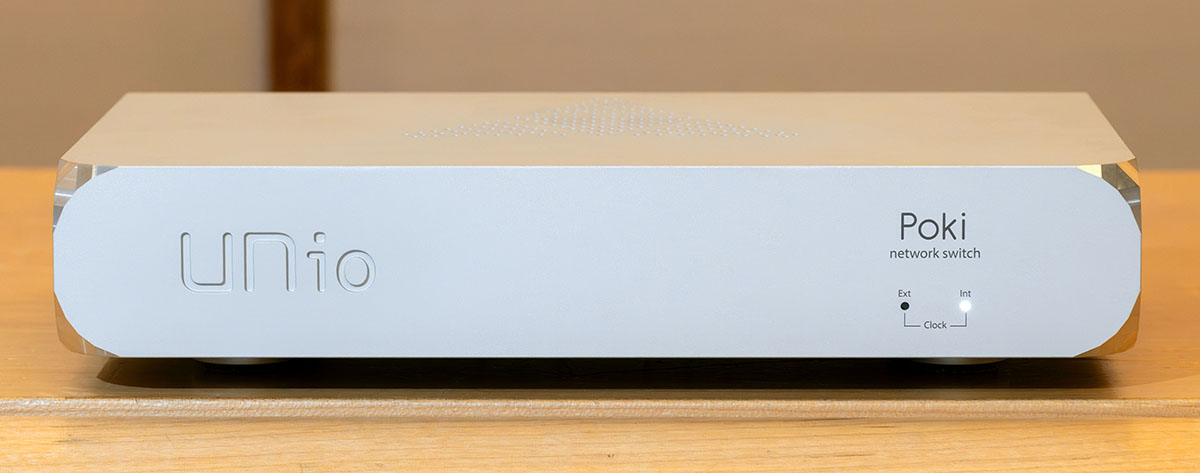
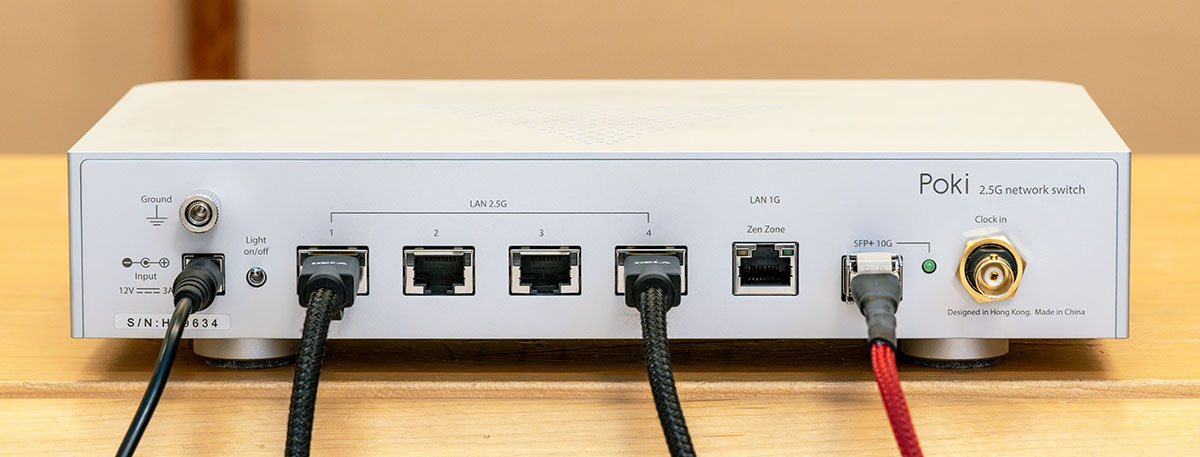
The "Poki" is equipped with four 2.5Gbps LAN ports, one 1Gbps LAN port featuring the Zen Zone design, and one SFP port. As a dedicated shielded area, the Zen Zone provides low-noise characteristics highly suitable for audio applications.
The UNio Poki is an audio-grade network switch equipped with four 2.5Gbps RJ45 ports, one audio-dedicated 1Gbps "Zen Zone" port, and one SFP port (1/10Gbps). Its machined aluminum chassis reflects thorough attention to vibration control. It incorporates meticulous hi-fi grade noise countermeasures, including selected ultra-low phase noise clock elements and Japanese carbon fiber shielding. Furthermore, the RJ45 port designated as "Zen Zone" employs proprietary isolation technology to thoroughly suppress interference with other ports and internal circuitry. True to its name inspired by "Zen," it reflects an uncompromising commitment to noise suppression in pursuit of absolute, unadulterated tranquility.
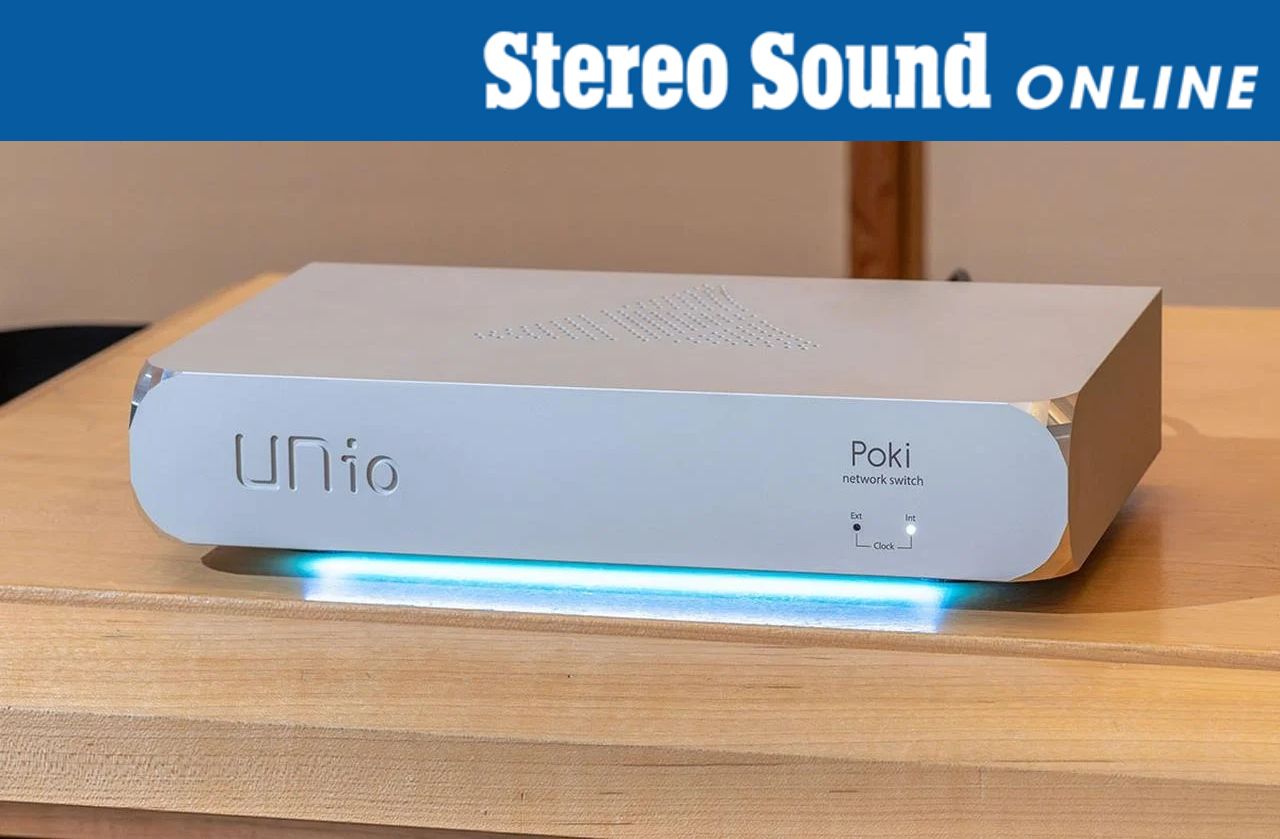
While the blue illumination on the lower front panel serves no functional purpose, it pairs with the rose-cut chassis finish to create a sleek, sophisticated aesthetic. While many network switches feature plain designs, Poki’s look is understated yet commanding, holding its own alongside high-end audio components. Additionally, an LED indicator on the right side of the front panel displays the status of internal/external clock selection.
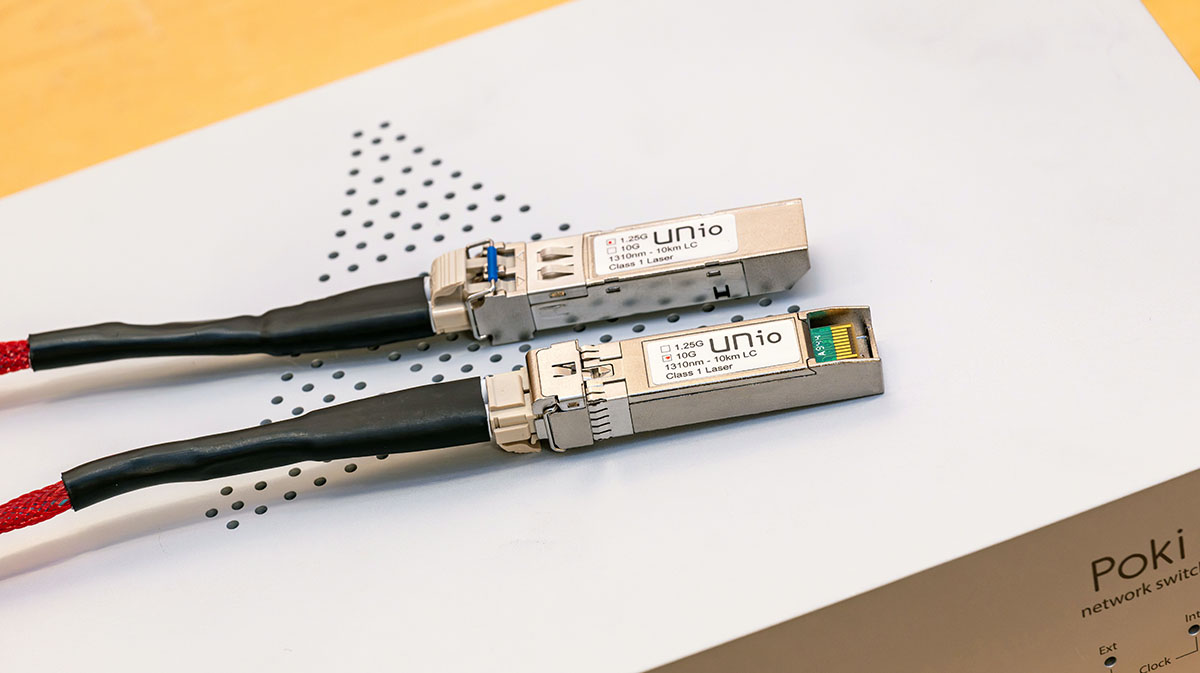
UNio’s SFP optical cable "OF1" (1.25Gbps, top) and SFP+ optical cable "OF10" (10Gbps, bottom).
For SFP optical connectivity, UNio offers the 1.25Gbps "OF1" and the 10Gbps "OF10" transceiver modules. While both modules utilize single-mode specifications, UNio intentionally paired them with "OM4" multi-mode optical fiber cables. UNio confirmed through extensive testing that this specific combination yields the most stable performance and high-precision optical transmission. In a market where options for audio-grade optical fibers and modules remain limited, products carefully vetted through rich experience provide great peace of mind, while their reasonable pricing lowers the barrier to entry.
The evaluation was conducted using YBA’s streamer DAC "YM302" as the core of the system, focusing on Qobuz playback to analyze sound quality differences with and without the Poki. The primary connection point varied between the Poki and YM302: the first half utilized the Zen Zone port via RJ45, while the second half tested the SFP connection. Additionally, local playback via the listening room's reference DELA "N1" music server was evaluated to observe the sonic impact of adding the switch.
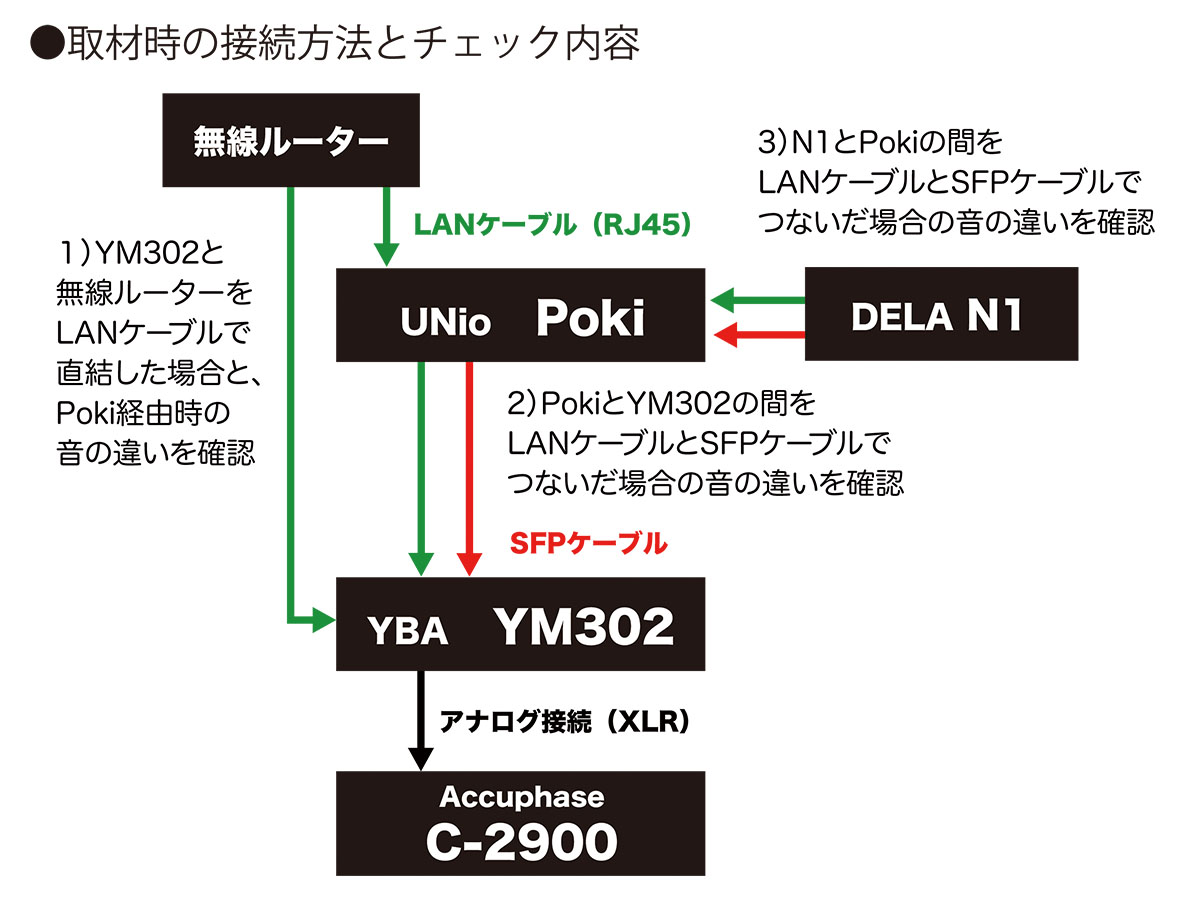
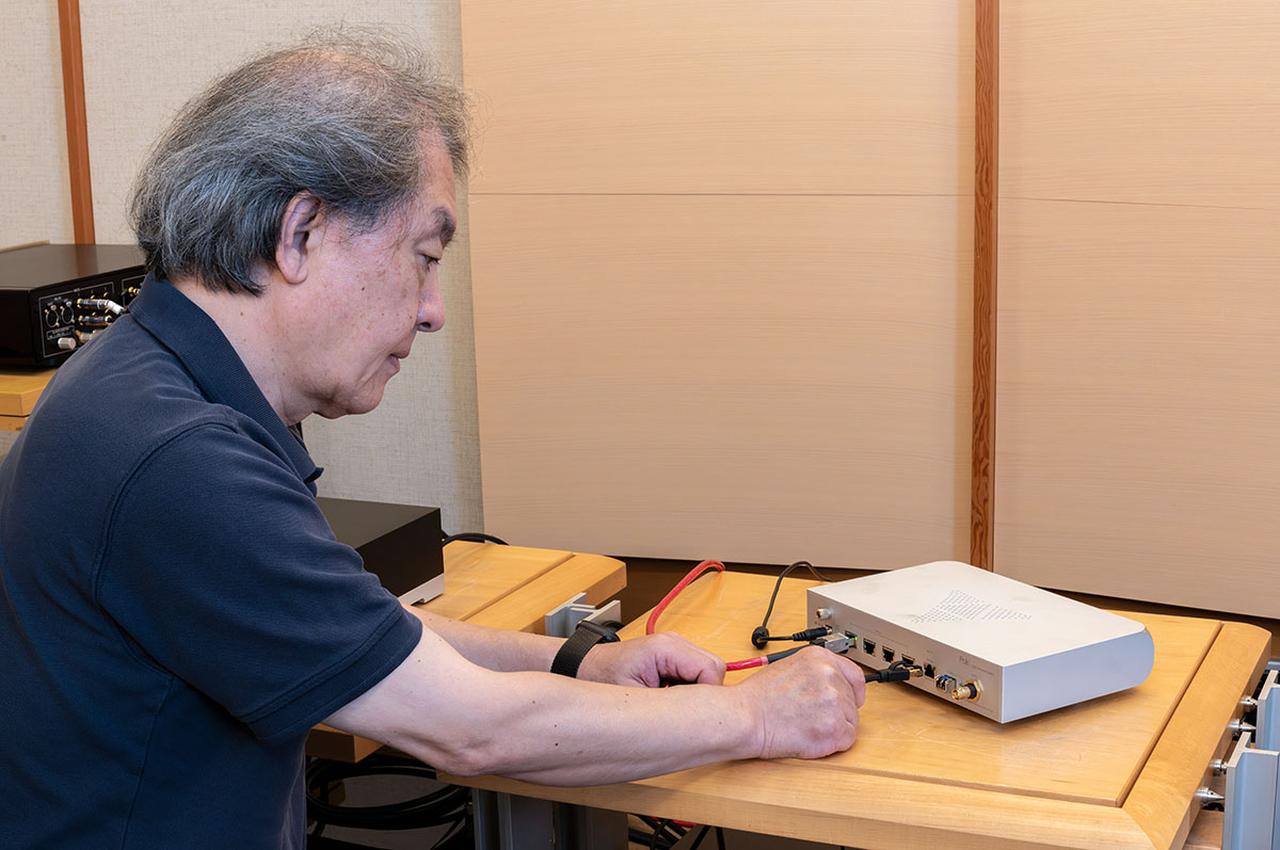
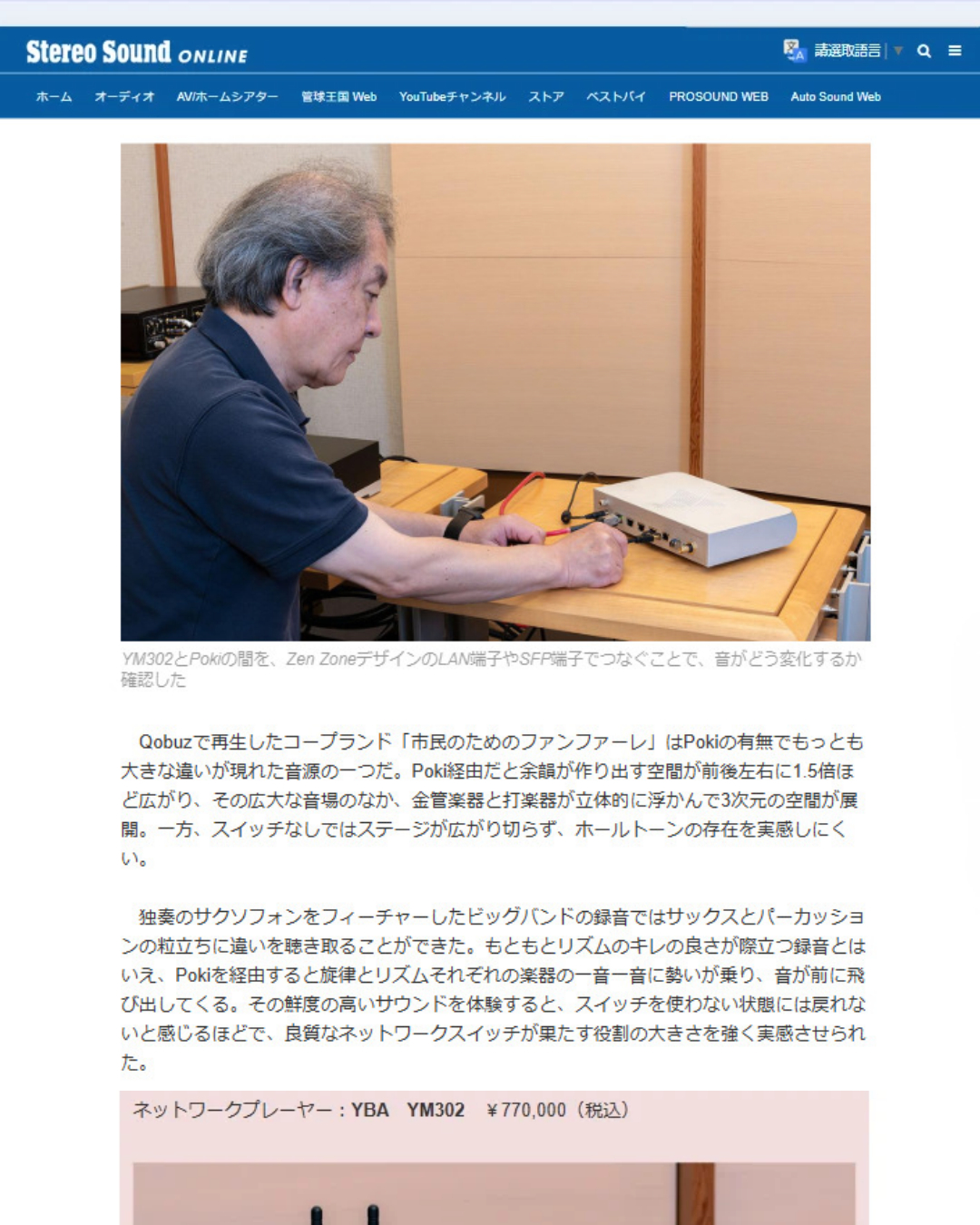
Sonic variations were evaluated by connecting the YM302 and Poki via the Zen Zone LAN port and the SFP port.
Aaron Copland’s Fanfare for the Common Man on Qobuz revealed one of the most drastic differences between using and bypassing the Poki. With the Poki in the chain, the ambient soundstage expanded by roughly 1.5 times in all directions. Within this vast sound field, brass and percussion instruments floated with vivid three-dimensionality. Conversely, without the switch, the stage felt constrained, and the sense of hall acoustics was noticeably diminished.
In a big band recording featuring solo saxophone, clear improvements were heard in the texture and clarity of both the saxophone and percussion. Though the recording naturally possesses sharp rhythm and timing, routing through the Poki infused every note of the melody and rhythm section with drive and presence, projecting the sound forward. Experiencing this fresh, vivid sound makes it hard to return to a setup without the switch, strongly highlighting the vital role a quality network switch plays.
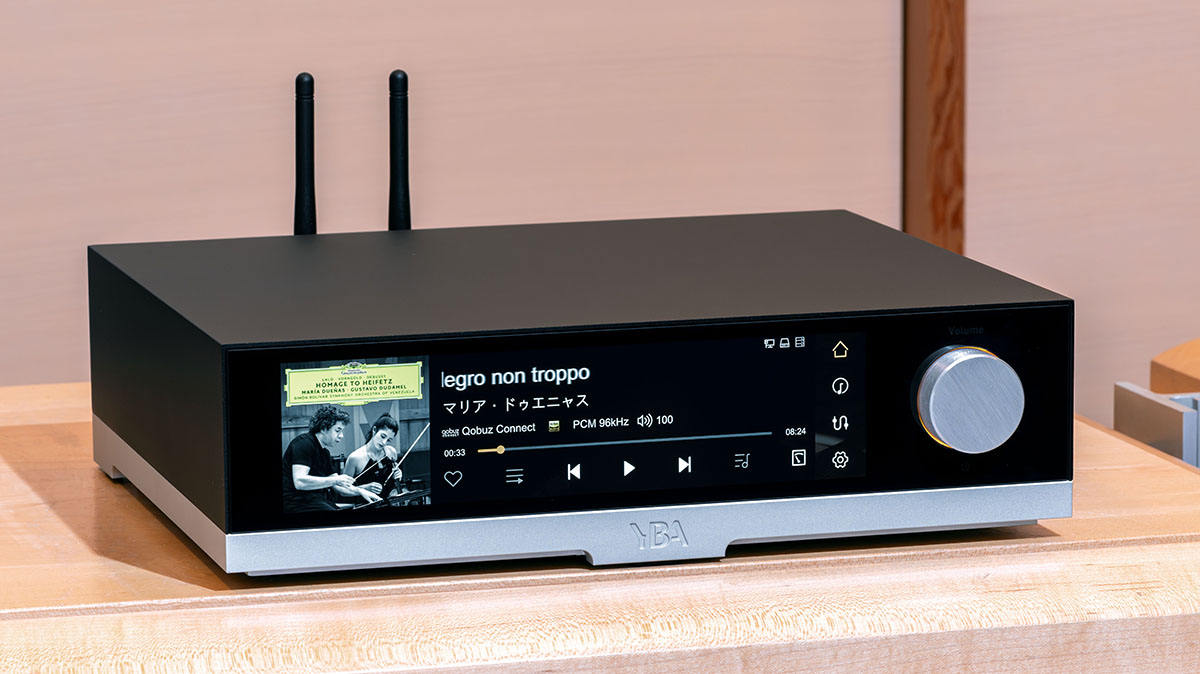
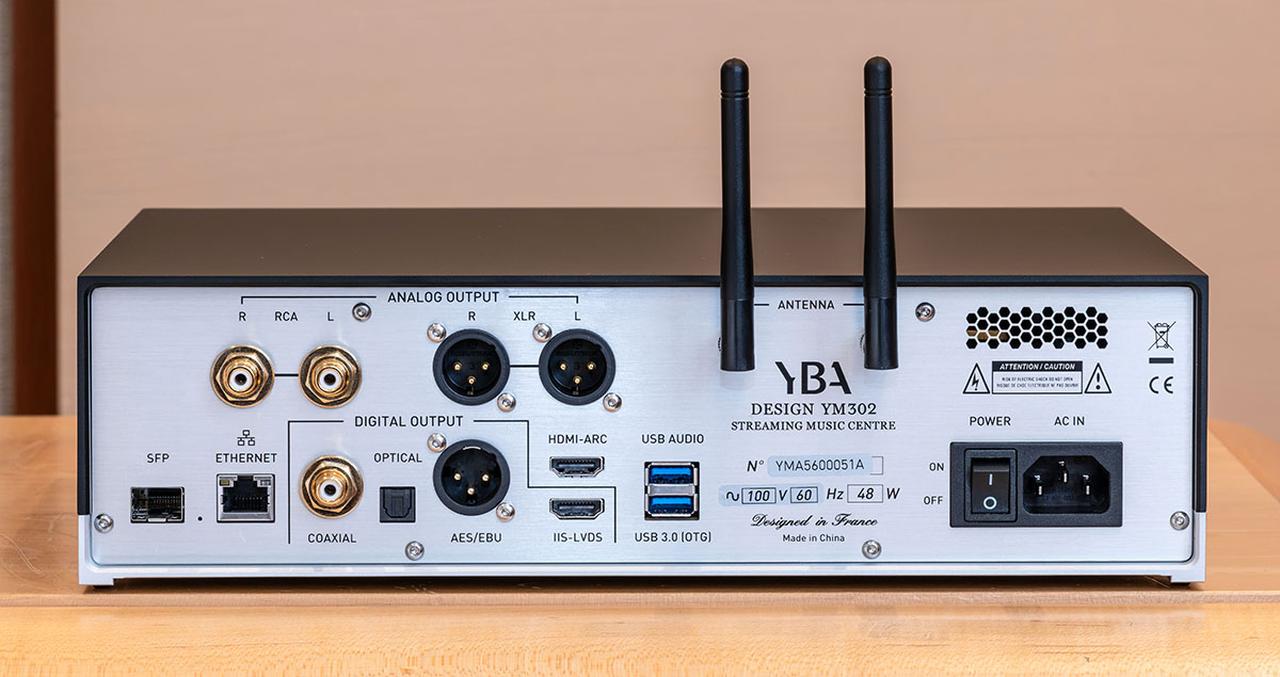
For this audition, YBA’s new network player "YM302" was used to play music from Qobuz and local files stored on a NAS. The volume control function was bypassed, using it purely as a source player.
Switching to the SFP optical connection allowed us to evaluate the noise isolation benefits of fiber optics. On Fanfare, subtle air vibrations just before the decay of the bass drum (gran cassa) and tam-tam faded away became clearly audible, dropping the noise floor to an even deeper level of silence. As the trumpet and french horn melodies emerged from this absolute stillness, the breath-taking tension and the sheer beauty and softness of the tone captivated the listener. For the big band track, beyond improved micro-detail, the tonal balance shifted lower, revealing clear, articulated movement in the bass and percussion low frequencies.
On Dominique Fils-Aimé’s vocal tracks, while the RJ45 connection had already sharpened vocal focus, the SFP connection delivered unexpected enhancements—improving separation between the lead and backing vocals and delivering striking attack on the double bass. This improvement stems from clearing away subtle background noise that previously blurred fine details, restoring original clarity and openness. The difference was substantial and highly repeatable.
Next, the DELA N1 was connected to the Poki to verify if similar audio improvements applied to local file playback. As with Qobuz streaming, both standard RJ45 and SFP optical connections were tested between the Poki and YM302.
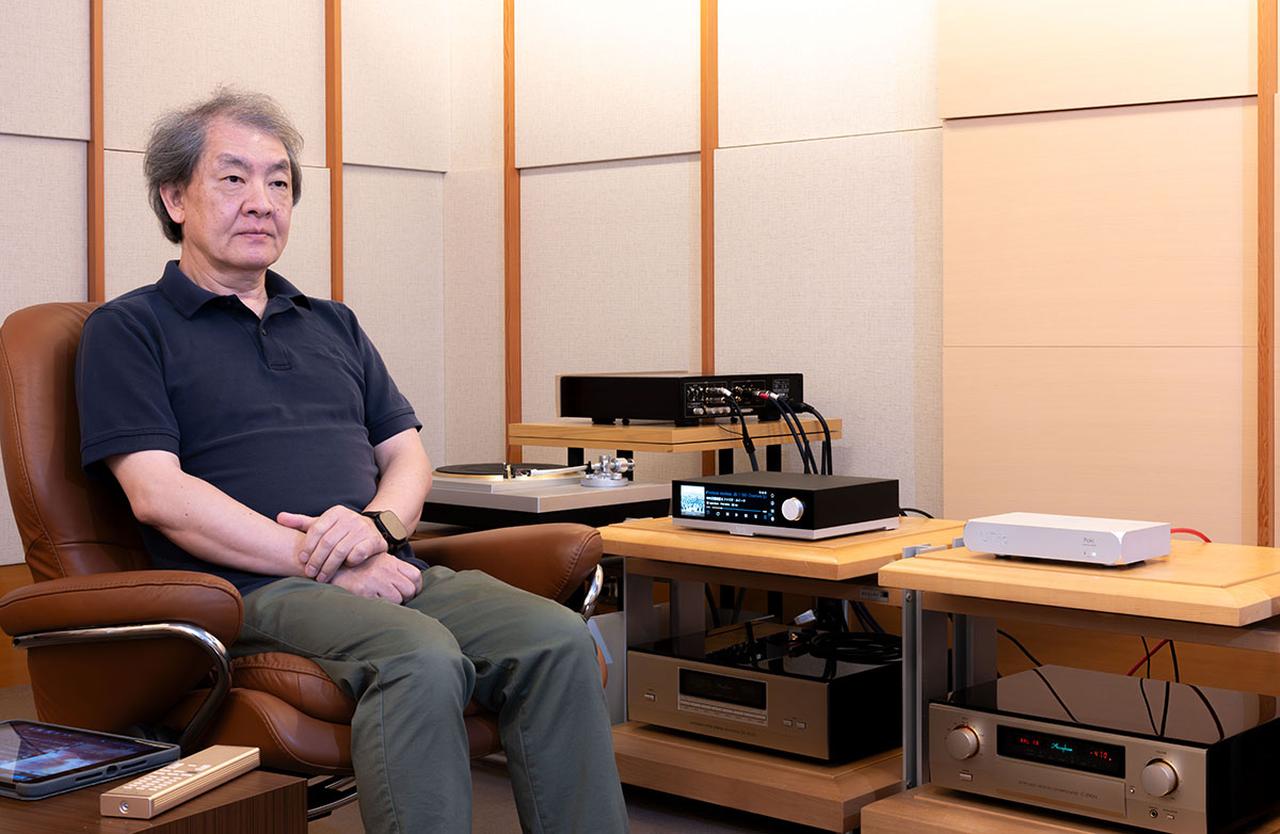 Auditioned in the StereoSound ONLINE listening room with reference equipment: Accuphase "C-2900" preamp, "A-300" power amp, and B&W "801 D4 Signature" loudspeakers.
On a track by Nicki Parrott, routing through the Poki enhanced instrument separation, particularly giving the guitar and saxophone greater freshness and dynamic drive. Intriguingly, beyond mere clarity, the tones acquired a denser, more cohesive core. Switching to the SFP connection stabilized the imaging of both vocals and saxophone, further elevating spatial rendering. On Petra Magoni’s vocal performance accompanied by lute (DSD format), emotional nuance deepened, with a wider, more palpable vibrato.
While network switches are now recognized as essential components in network audio systems, achieving undeniable sonic improvements requires extensive technical know-how in noise suppression and vibration control. UNio combines vast experience in network audio with insights gained from developing isolators and equipment racks. The Poki stands out as a remarkable hi-fi grade network switch that effectively translates this rich background into performance.